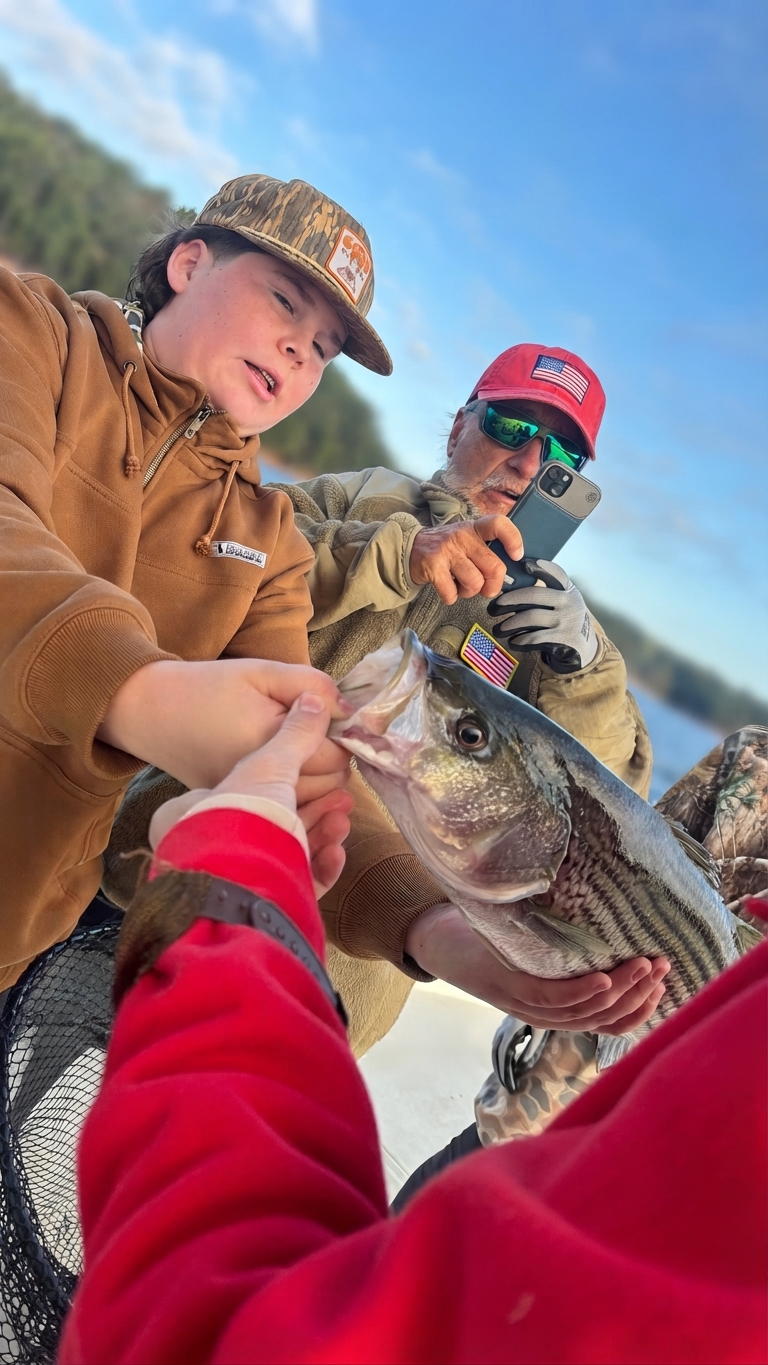
Biting right now — October
The lake starts turning over in October and bait gets pushed up onto humps and long points. We run planer boards and down lines over structure for stripers and spots, then slide shallow to work docks and rock for largemouth. Catfish and white bass are still active enough to fill in a slow stretch, and gar show up on the surface on calm mornings.
Striped Bass
Stripers school up hard on the main lake humps and points and we run down lines and free lines on bait balls all day long.
Largemouth Bass
Bass are shallow and aggressive, chasing spawn cycles or fall bait schools around docks, points, and creek mouths, and we work moving baits and soft plastics fast.
Spotted Bass
Spots feed steadily on points and humps and we work jigs and drop shots through the mid depths to keep bites coming.
Catfish
Catfish are sluggish on the bottom and bites are few and far between even on cut bait.
Every species, every month
This page breaks down when striped bass, spotted bass, largemouth, crappie, catfish and gar actually turn on at Lake Lanier throughout the year. Spring runs deep with options, summer belongs to catfish and gar, and the dead of winter is genuinely slow, so we tell you straight rather than sell you twelve good months.
Most cells show how often each species turns up in our trip photos. Dotted cells show the typical pattern.
← Swipe the table to see every month →
| Species | Jan | Feb | Mar | Apr | May | Jun | Jul | Aug | Sep | OctNOW | Nov | Dec |
|---|---|---|---|---|---|---|---|---|---|---|---|---|
| Striped Bass | goodtypical | peaktypical | most trips | most trips | most trips | most trips | most trips | most trips | most trips | most trips | peaktypical | goodtypical |
| Spotted Bass | slowtypical | goodtypical | most trips | most trips | most trips | most trips | often | sometimes | often | often | goodtypical | slowtypical |
| Catfish | offtypical | offtypical | not seen | often | often | sometimes | not seen | not seen | not seen | sometimes | slowtypical | offtypical |
| Largemouth Bass | slowtypical | goodtypical | peaktypical | peaktypical | peaktypical | goodtypical | slowtypical | slowtypical | goodtypical | peaktypical | goodtypical | slowtypical |
| Gar | offtypical | offtypical | sometimes | sometimes | sometimes | sometimes | sometimes | not seen | not seen | not seen | slowtypical | offtypical |
| White Bass | slowtypical | goodtypical | sometimes | sometimes | sometimes | sometimes | not seen | not seen | not seen | not seen | slowtypical | slowtypical |
| Crappie | slowtypical | goodtypical | sometimes | not seen | sometimes | not seen | not seen | not seen | not seen | not seen | goodtypical | slowtypical |
Seasons, size limits and bag limits on Lake Lanier change from year to year. Check with the Georgia Department of Natural Resources before you keep any fish.
Month by month
What the water's doing, what's turned on, and which trip fits.
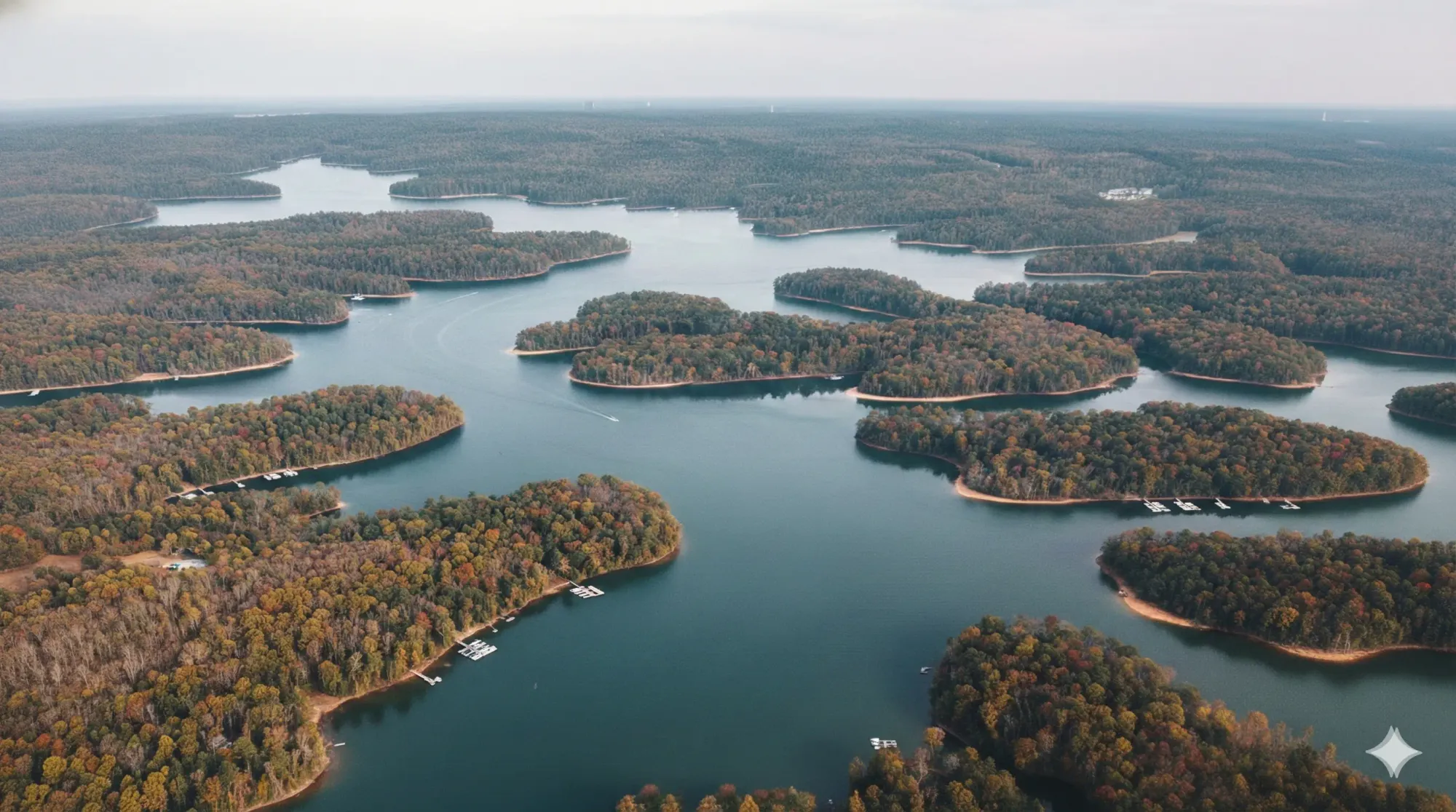
January
48-52°FWater is cold and stripers are grouped up deep over main lake humps and points, feeding on threadfin shad balls we mark on the graph. We fish live bait straight down or slow troll to cover water until we find them. Spots and largemouth are sluggish this month and bites are light, but the striper bite alone is worth the trip.
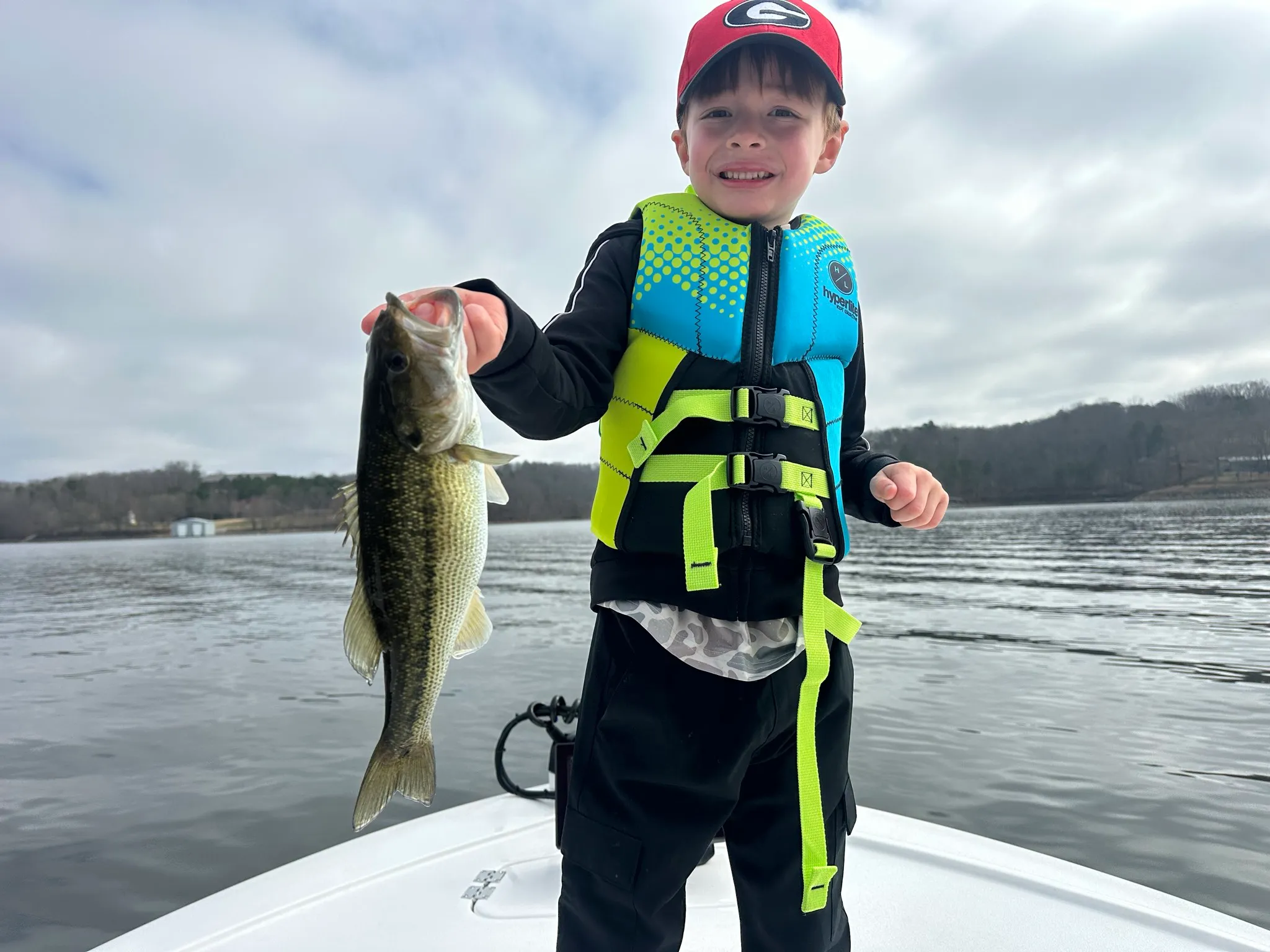
February
50-55°FThis is when striper fishing on Lanier really turns on. Fish stack up on deep structure near the dam and up the river arms, and we work live bait and umbrella rigs through those schools all day. Largemouth, white bass and crappie are also waking up around brush and creek channel bends, so it is a good month to mix species if the group wants variety.
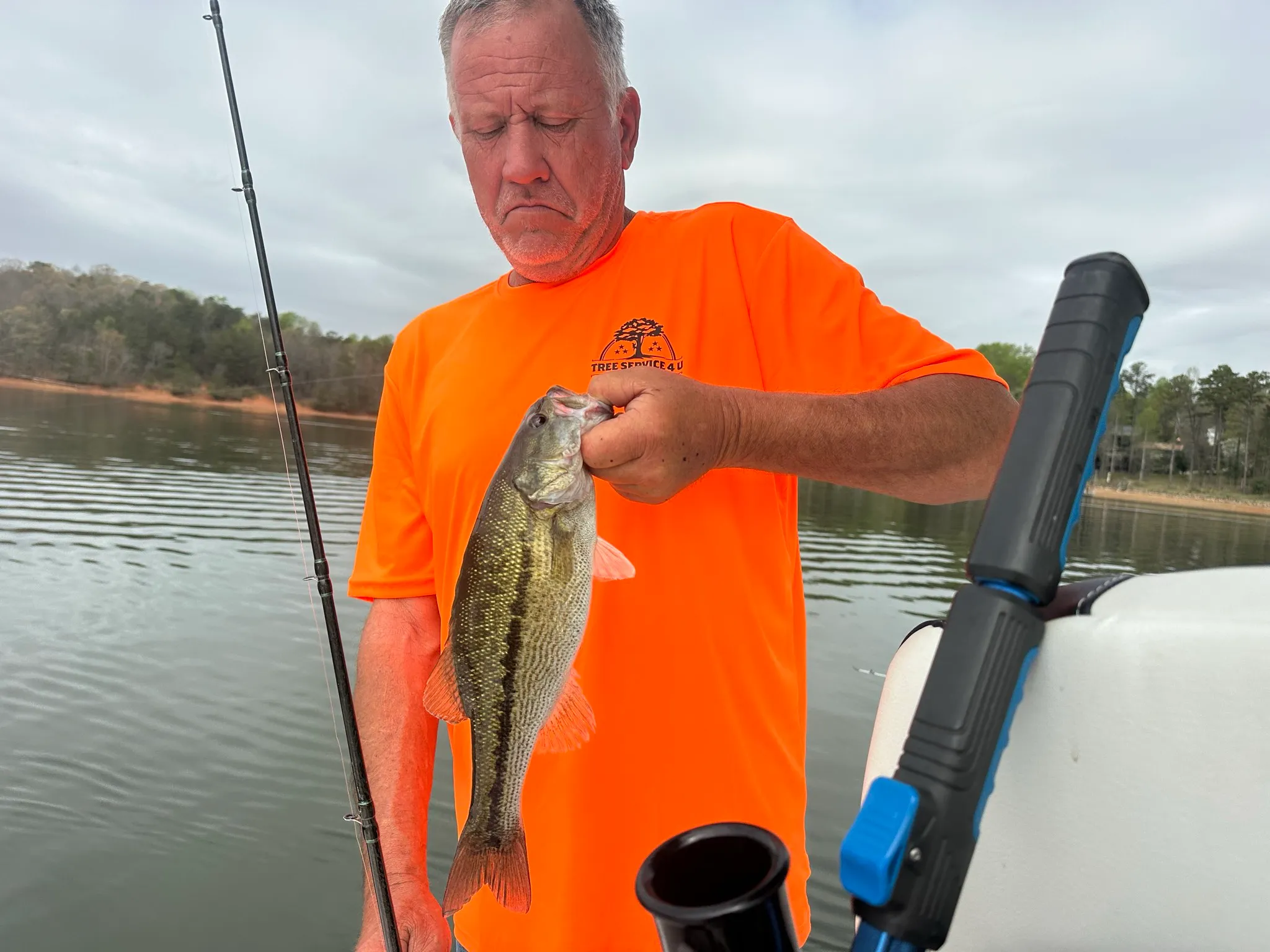
March
55-62°FMarch is the best all-around month we have on Lanier. Stripers are shallow and aggressive as water warms, largemouth and spots are staging on points ahead of the spawn, and white bass and crappie are pushing into creek arms in numbers. We can run a pure striper trip or mix baits to put multiple species in the box depending on what the group wants.
April
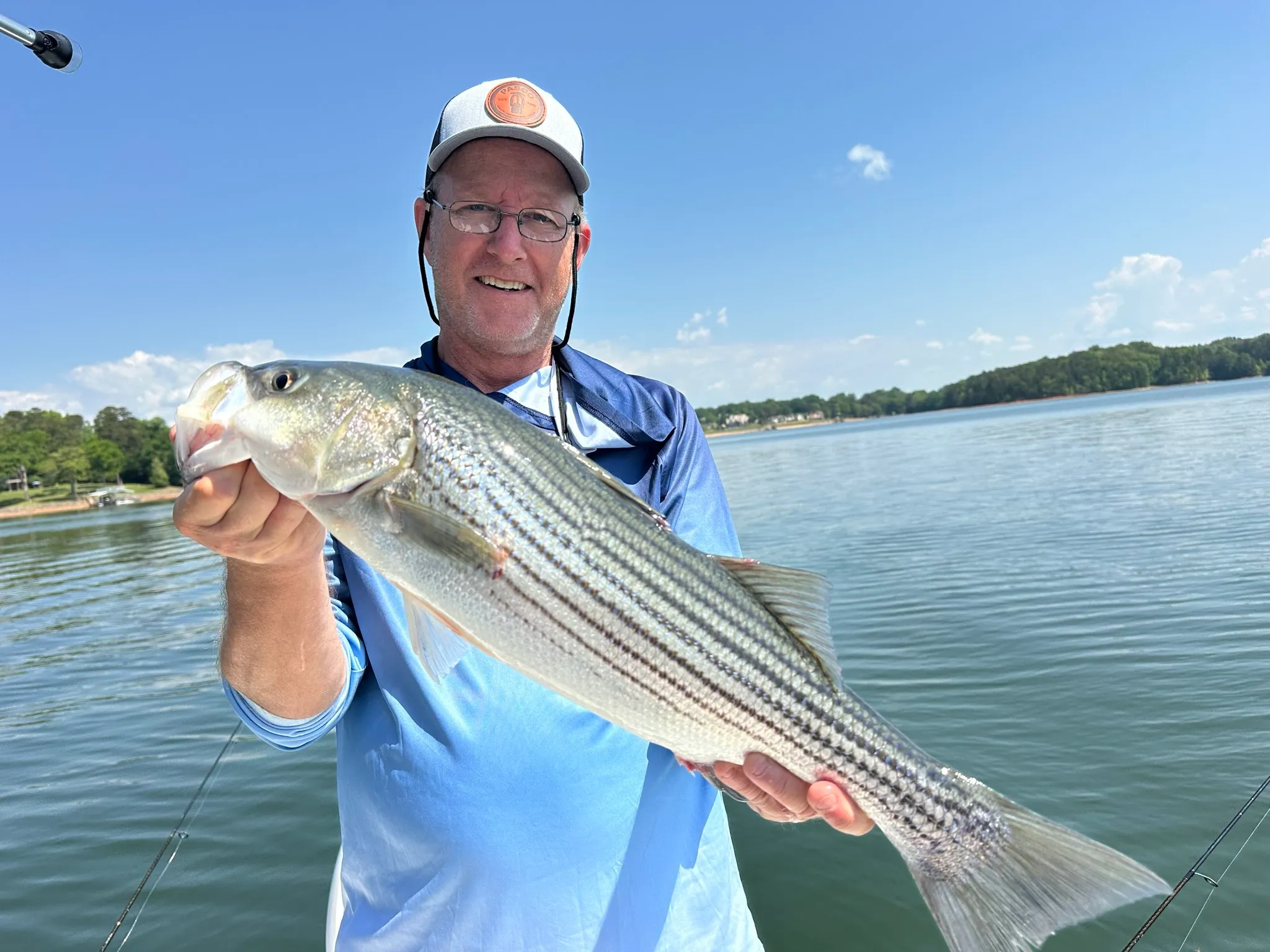
60-68°FWater is warming fast and everything on Lanier turns on at once. Stripers and white bass push up the rivers and creek arms chasing shad, largemouth stack on points and brush, and crappie hold tight to standing timber and deep brush piles. This is our busiest stretch of the year and we run trips daily to keep up with it.
May
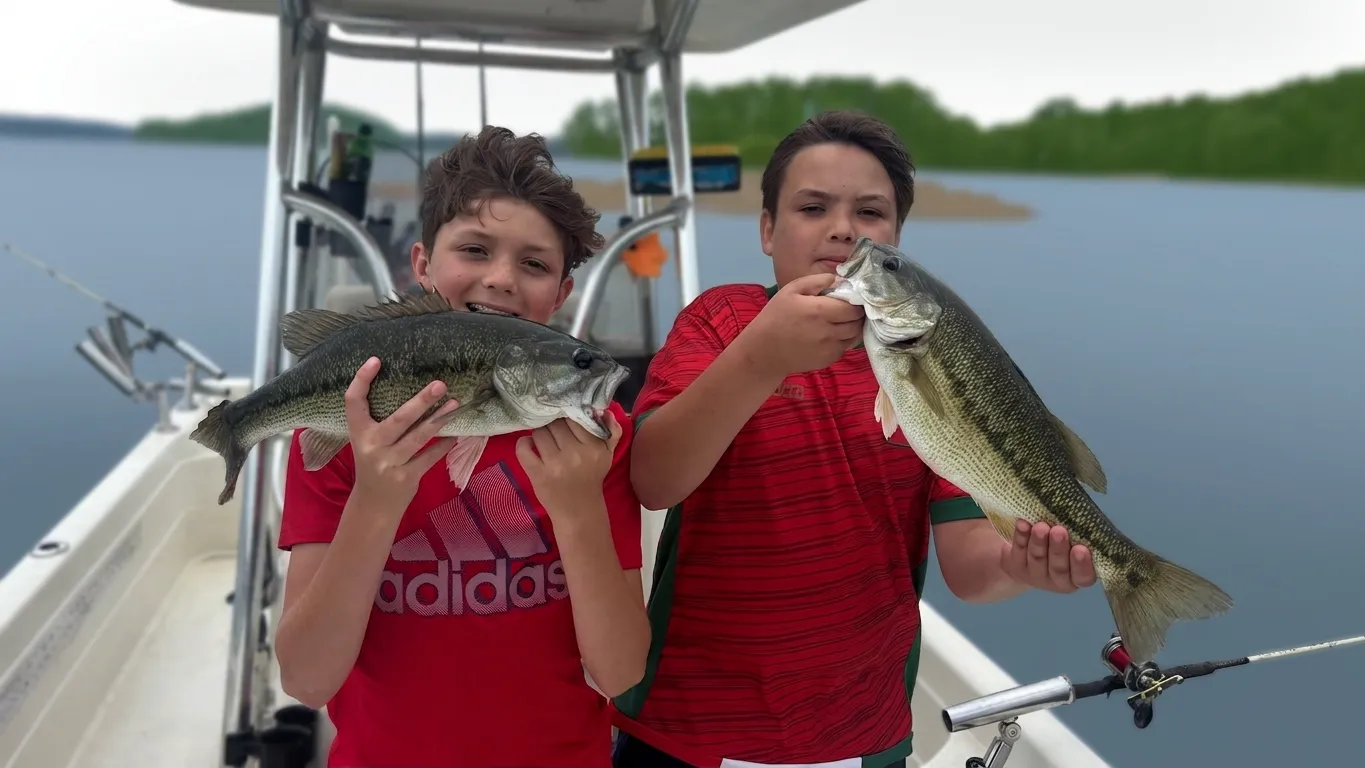
68-75°FThe thermocline starts to set up and bait pushes deeper on the humps and ledges. Largemouth and crappie are still locked in and biting well, stripers and spots stay steady out over deep structure, and catfish start showing up strong on cut bait around the flats near the dam. We adjust depth through the month as the water column settles.
June
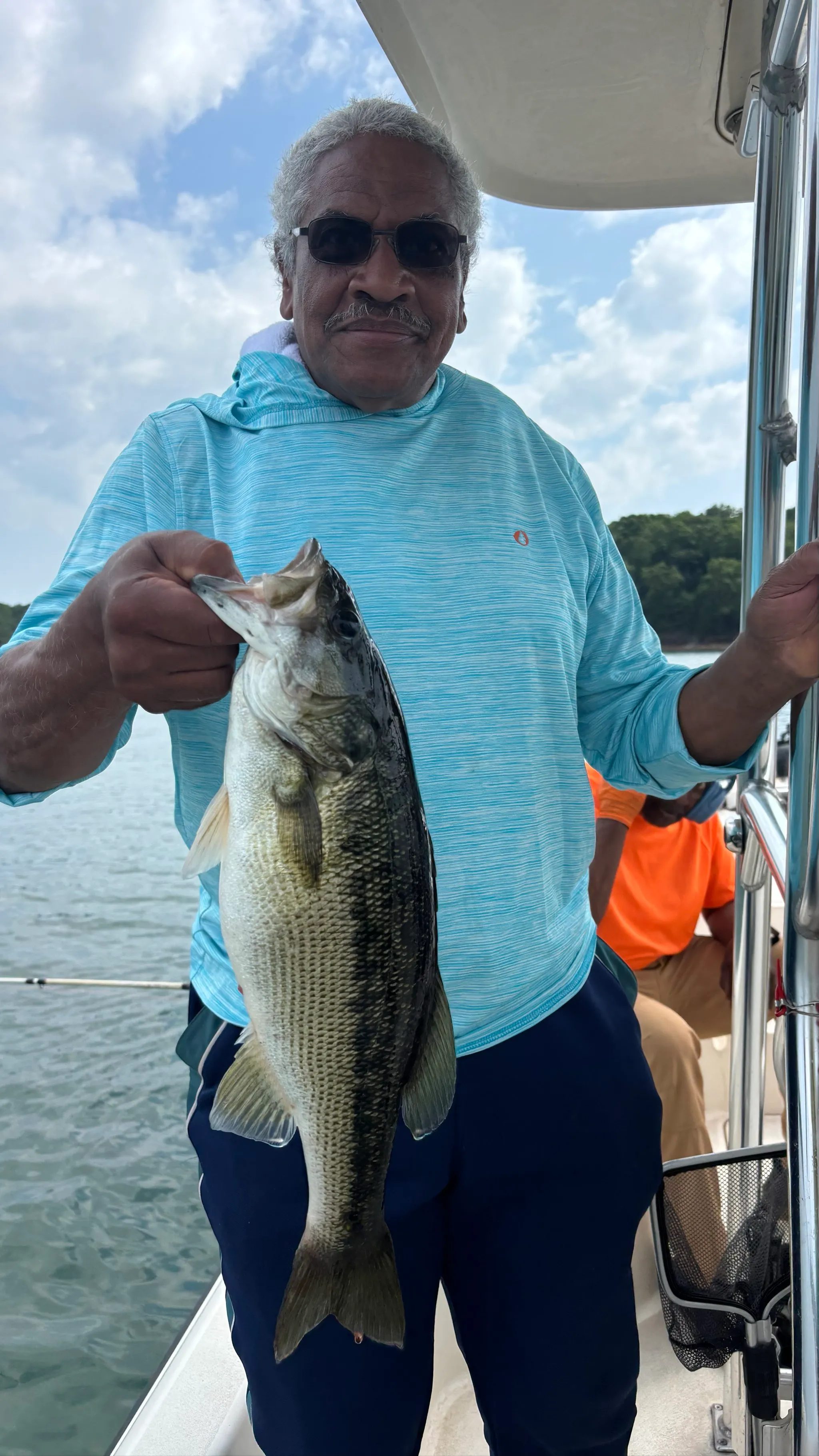
75-82°FThe thermocline is locked in and stripers and spots slide down onto deep points and humps where we work them with downlines. Catfish and gar really turn on this month, feeding hard in the warmer water along channel edges and flats. Largemouth are still catchable around brush and dock lines but the bite slows some as the heat builds.
July
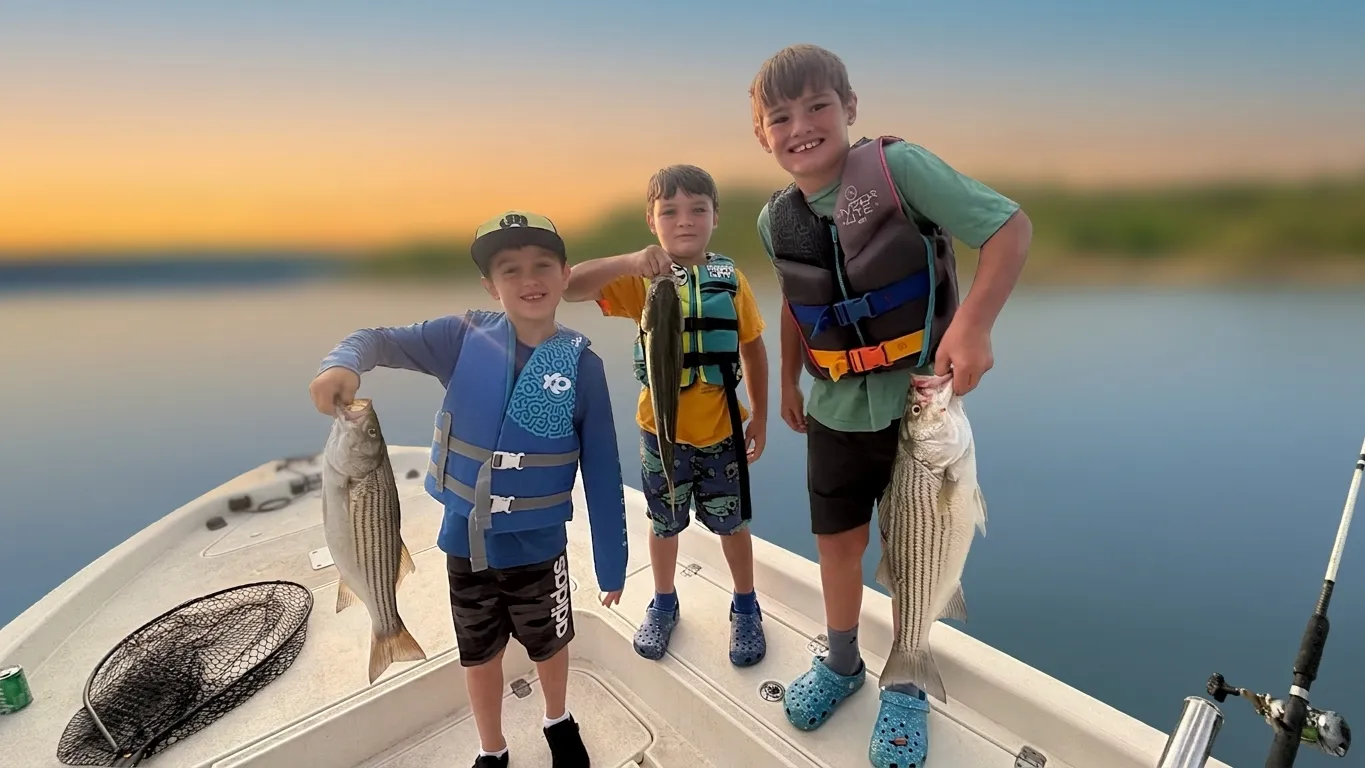
84-88°FThe lake is warm top to bottom and the thermocline pushes most fish deep. We fish channel catfish and gar out over deep humps and old creek channels where they stay active all day, while spotted bass hold tight to brush and rock on the main lake points. Striper, largemouth, white bass, and crappie are slow this month, so we do not chase them hard in July.
August
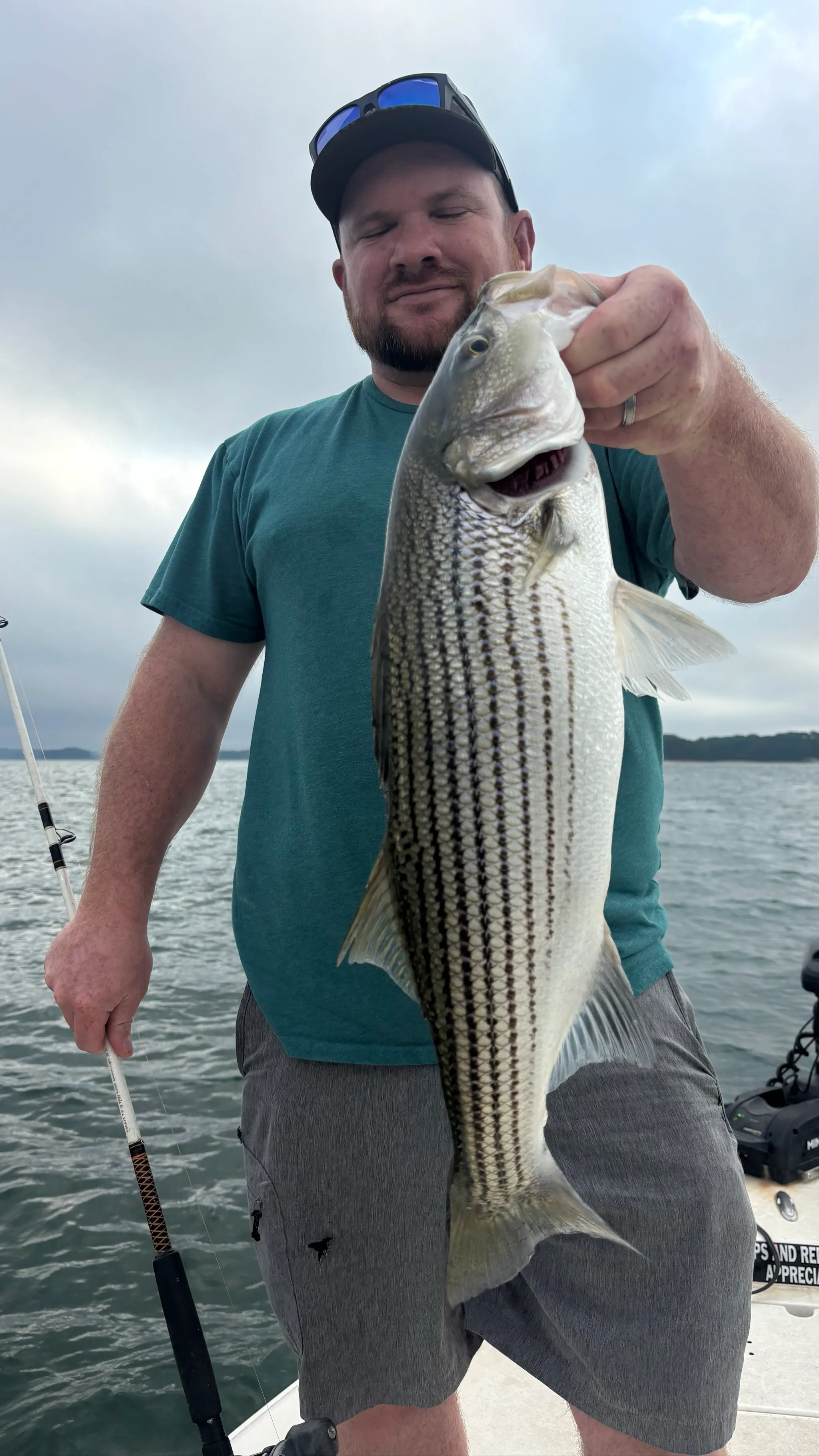
85-89°FAugust looks a lot like July on Lanier. Catfish and gar stay locked in on deep structure and keep biting through the heat, and spotted bass work the same deep points and ledges. Striper, largemouth, white bass, and crappie remain slow, so we build the day around catfish and gar with some spotted bass mixed in.
September
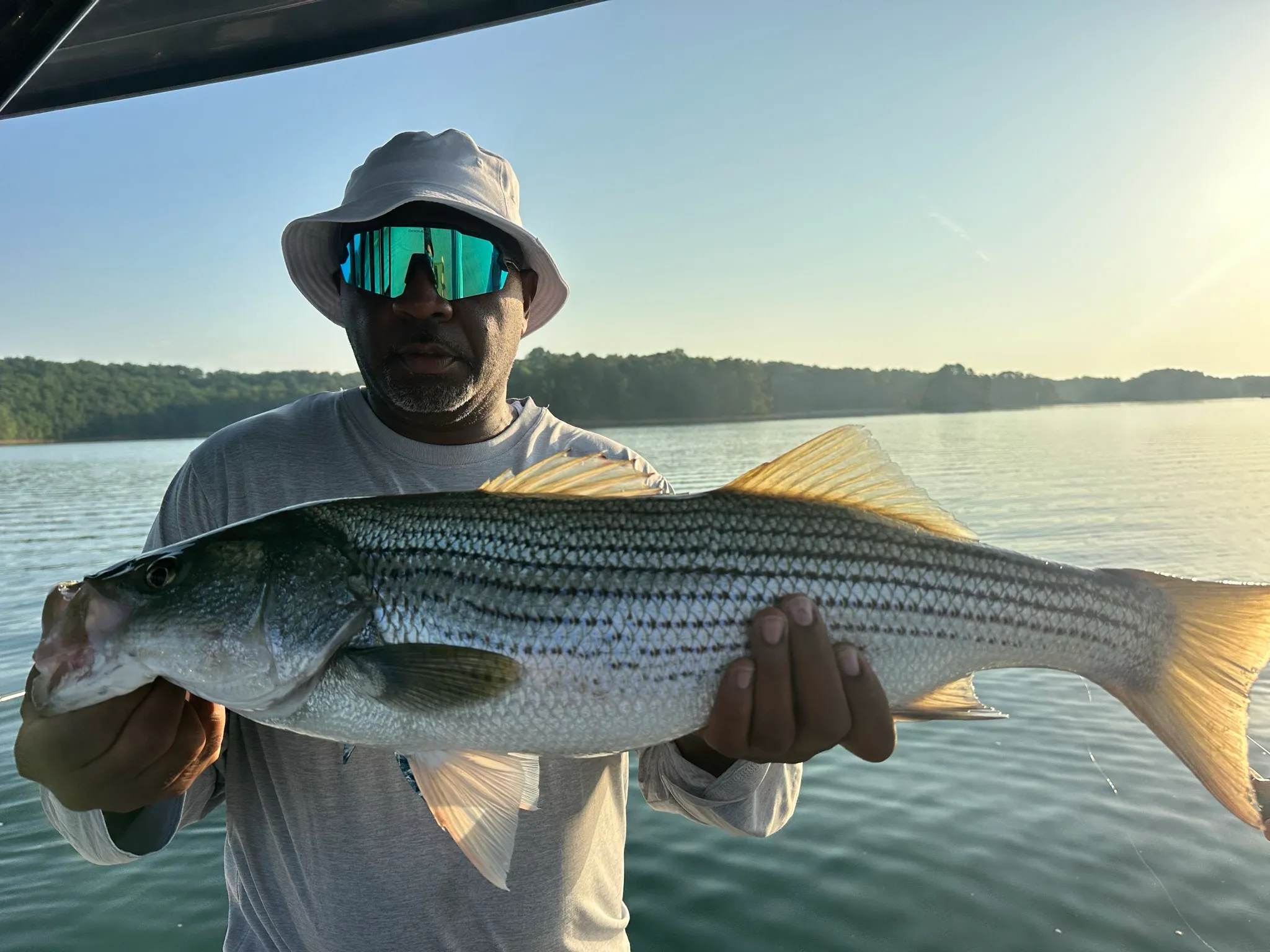
78-84°FCooling water breaks up the thermocline and the whole lake wakes up. Spotted bass peak on the points and humps, and striper, largemouth, white bass, and crappie all turn on as bait scatters and current moves through the creek arms. This is one of our best months to run a full day and cover water for a mixed bag.
October
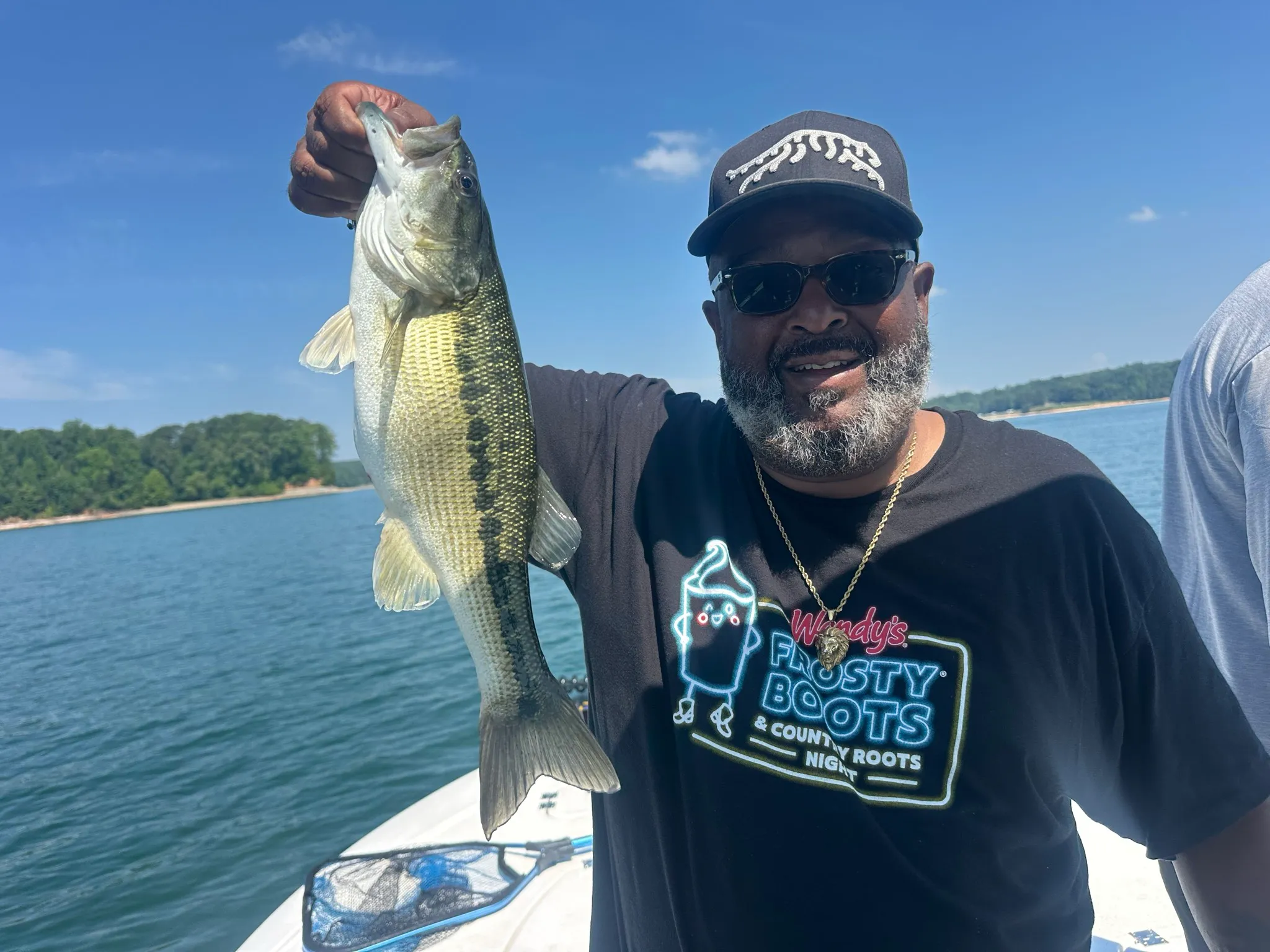
68-74°FThe lake starts turning over in October and bait gets pushed up onto humps and long points. We run planer boards and down lines over structure for stripers and spots, then slide shallow to work docks and rock for largemouth. Catfish and white bass are still active enough to fill in a slow stretch, and gar show up on the surface on calm mornings.
November
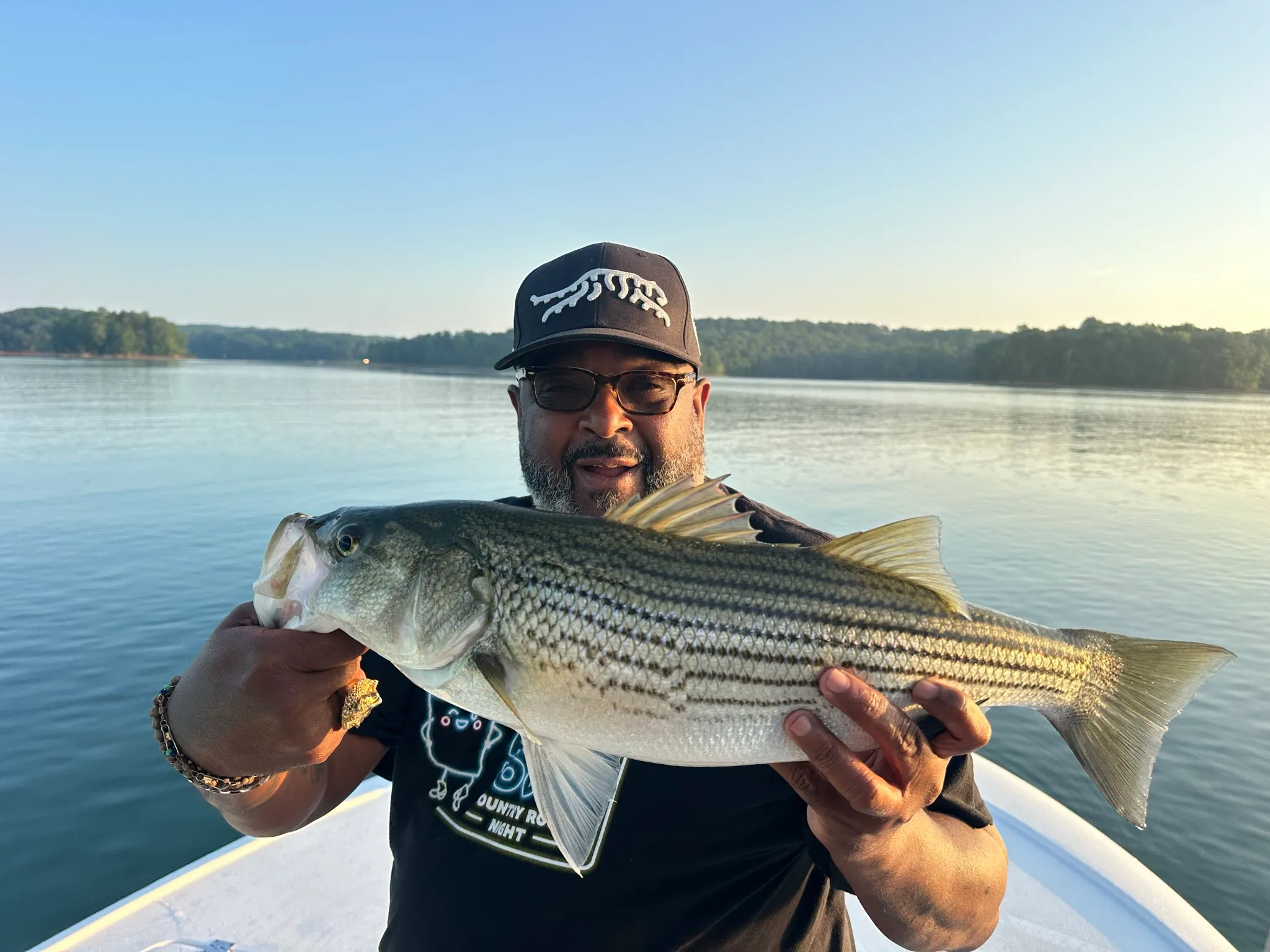
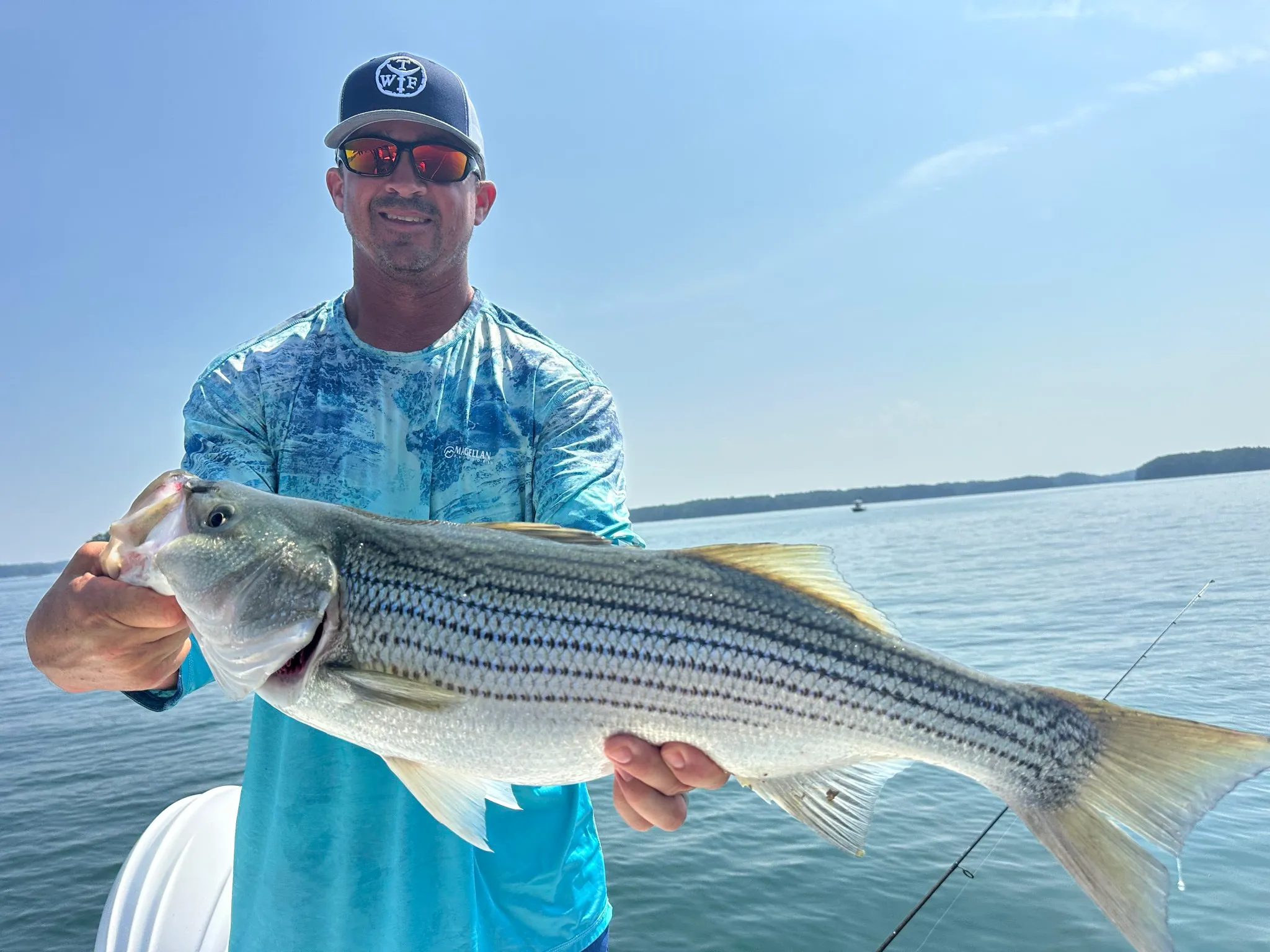
58-65°FShad get pushed back into the creeks and stripers follow them hard, this is one of our best months for consistent surface and mid-depth action on the main lake. Largemouth and spots stack up on the same points and brush piles the bait is holding on, and crappie are grouped up around standing timber and deep brush. Catfish and gar slow way down and are not worth targeting this month.
December
48-55°FWater temps drop and most species shut down, but stripers stay reliable, holding deep on main lake humps and river channel bends where we work them with down lines. Spotted bass and crappie will still bite but you have to slow down and fish tight to structure to get numbers. Catfish and gar are effectively done for the year on this lake.
Where we fish, and when it's best
Upper Lanier River Channel (Chattahoochee arm)
Best Dec - Mar — Cold water pushes stripers up into the river current and mud lines here. We troll and pull down baits along the channel edges when the rest of the lake is slow.
Main Lake Humps and Points near the Dam
Best Jun - Aug — Once the thermocline sets up, stripers stack over deep humps and long points close to Buford Dam. We fish down baits and spoons right on that temperature break.
Browns Bridge and Lanier Islands Bridges
Best Apr - May — Bridge pilings hold bait and current breaks right as water starts to warm. Stripers use the shade lines and rip current around these structures during the spring push.
Standing Timber Flats
Best Sep - Nov — As baitfish scatter into the timber in fall, stripers follow them shallow. We work live bait and topwater around the standing trees on cooling afternoons.
Creek Arm Mouths (Flowery Branch, Balus, Chestatee)
Best Mar - Apr and Oct - Nov — Bait funnels through these mouths on the spring warm up and again in fall as water cools. Stripers ambush right where the creek channel meets open water.
Deep Basin Near the Dam Face
Best Jul - Sep — Mid-summer heat pushes fish into the deepest, coolest water on the lake. We fish this stretch hard in August when surface temps make everywhere else tough.
Common questions
What is the best month to fish Lake Lanier?
Is it worth booking a trip in the off months?
When do striped bass show up on Lake Lanier?
What does a typical day look like in the middle of the season?
What is the slowest time of year to fish Lake Lanier?
Ready to Get on the Water?
Dates fill up fast in season. Reach out to Jeff Blair Striper Guides to lock in your charter.